Understanding ADHD and Demand Avoidance in Teens
ADHD, Demand Avoidance, Parenting ADHD Teens
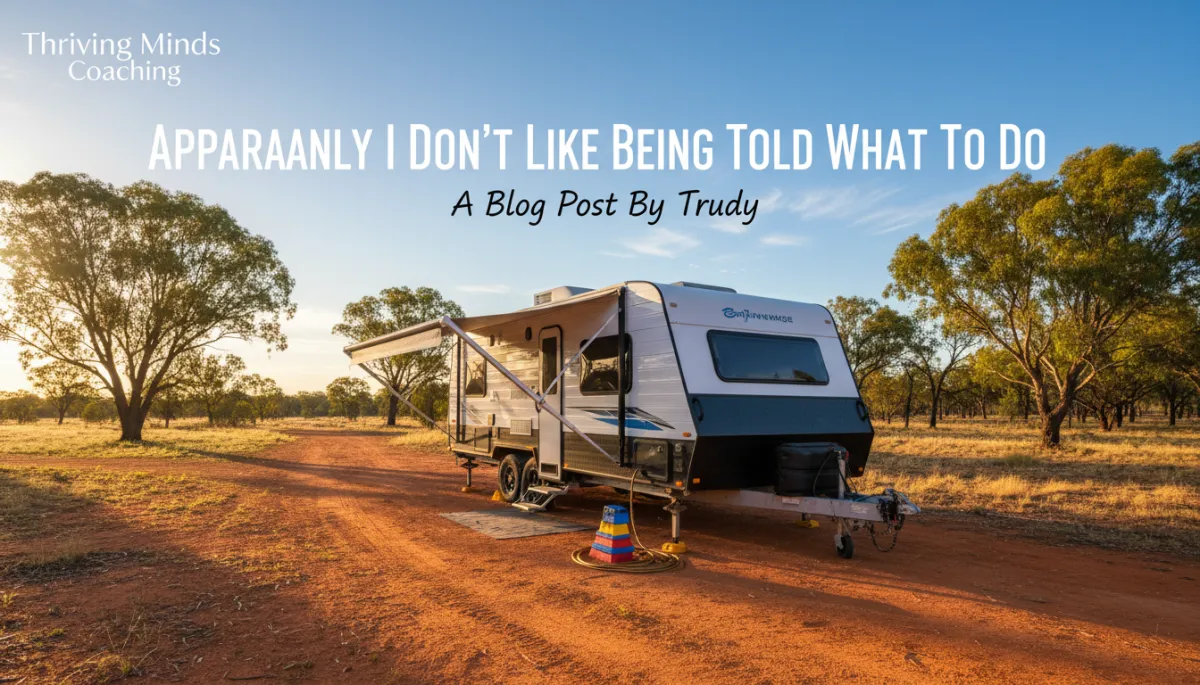
Apparently I Don't Like Being Told What To Do
A caravan, an ADHD brain, and what my “NOPE” moments can teach ADHD adults and parents of ADHD teens about demand avoidance, autonomy, and what’s really underneath resistance.
My Confession from the Caravan
I have a confession: I have demand avoidancetolerance seems lower, my irritation a bit higher, and my internal teenager… loud. Very loud.
Here’s what caravan life often sounds like:
“Can you put the chocks down?” (Those little blocks around the wheels.)
“Can you plug the electricity in?”
“Can you attach the water?”
“Can you grab the…?”
And somewhere inside me there’s a very dramatic: UGHHHHHH. For many ADHD adults, that internal groan is extremely familiar. It’s that instant resistance that shows up the second something becomes a demand, even when we actually don’t mind doing it.
What Demand Avoidance Really Is (and Isn’t)
A demand is anything our brain experiences as something we have to do. It might come from outside — “Put your shoes on,” “Can you attach the water?” — or from inside our own head — “I need to reply to that email,” “I should book that appointment.” Our ADHD brain can experience even tiny requests as surprisingly heavy, especially when executive functioning is already stretched by travel, new environments, or just an ordinary Tuesday.
Here’s the key bit: you can genuinely want to do something and still feel a strong wave of resistance the moment it becomes a demand. That shift from “I choose” to “I have to” is where psychological reactance shows up — our brain’s urge to protect its autonomy and choice.

The task is simple; the internal resistance is anything but simple.
A Tale of Two Showers (Hello, ADHD Teens)
Parents of ADHD teens, this might sound familiar. Your teen is upstairs thinking, “I might have a shower.” They’ve decided. The task initiation is quietly warming up in the background. Then you call out, “Can you go and have a shower?” and suddenly they absolutely DO NOT want a shower. The task hasn’t changed — but the relationship to it has. It went from “I’m choosing this” to “Someone is telling me to do this.”
This is classic psychological reactance plus ADHD-style attention switching and transitions being hard. For many neurodivergent brains, especially in parenting ADHD teens, the more pressure we add, the more that Persistent Drive for Autonomy (yes, the PDA phrase) digs its heels in.
It’s Not Just “Being Told What To Do”
When my husband asks, “Can you put the chocks down?”, my brain quietly runs a full executive function obstacle course. It has to:
STOP what I’m doing (goodbye, current focus).
SHIFT my attention to a new task (attention switching).
HOLD the instruction in mind (working memory, part of executive functioning).
LEAVE what I was already doing (another transition).
CHANGE my internal plan (goodbye, precious autonomy).
INITIATE the new thing (task initiation, again).
That’s a lot of hidden cognitive work wrapped in one innocent question. No wonder our capacity sometimes taps out and our brain shouts, “NOPE,” even when the task is tiny and the person asking is lovely.
💡 Pro Tip: For ADHD adults and ADHD teens, it often isn’t laziness. It’s a combination of executive function load, autonomy loss, overwhelm, anxiety, and uncertainty about how to start.
Same “No”, Different Reasons Underneath
From the outside, “No” looks the same — eye roll, sigh, refusal, or a teen yelling “I KNOW!” But under the surface, it might be:
Task switching being hard (they’re deeply focused on something else).
Overwhelm (too many demands piling up at once).
Anxiety or uncertainty (they’re not sure how, or worry they’ll “do it wrong”).
Limited capacity (their brain is already running at 110%).
A need for choice and control (that Persistent Drive for Autonomy again).

Curiosity about our reactions opens more doors than criticism ever will.
PDA, Pathological Demand Avoidance and Getting Curious (Not Panicked)
A really important distinction: demand avoidance does not automatically mean Pathological Demand Avoidance or PDA. PDA (often reframed as Persistent Drive for Autonomy) is a much broader, more intense pattern of difficulty with everyday demands, usually understood in the context of autism and wider neurodivergence.
So when your teen snaps “I KNOW!” after a reminder, or you notice your own brain digging in its heels, try getting curious before you get worried. Ask yourself or them:
“Is starting hard, or is it stopping what you’re doing?”
“Do you need a few minutes before you switch?”
“Would you rather do it now or after dinner?” (hello, choice and autonomy).
“What’s making this feel hard?”
When Your Own Brain Is the Bossy One
Adults with ADHD do this to ourselves constantly. “I could go for a walk” feels light and appealing. Then it becomes “I HAVE TO EXERCISE TODAY,” and our brain immediately replies, “Absolutely not.” Nothing about the walk changed — only the demand-level did. Our inner voice can feel just as bossy as a parent calling down the hallway.
// A playful way to think about the ADHD brain and demands
const brainState = {
    focus: "scrolling campsites",
    capacity: 70, // percent
    wantsElectricity: true
};

function askToDoTask(task) {
    const feelsLikeDemand = true;
    const autonomyLevel = 30; // percent

    if (feelsLikeDemand && autonomyLevel < 50) {
        return "NOPE"; // psychological reactance
    }

    if (brainState.capacity < 50) {
        return "Too tired";
    }

    return "Okay, I’ll do it.";
}

console.log(askToDoTask("attachWater"));
If your internal console log is printing “NOPE” a lot, it might be time for some gentle ADHD coaching around demands, transitions, and how you talk to yourself.
My Little Caravan Experiment (and an Invitation)
This week, my experiment is simple: keep noticing my caravan “CAN YOU?” moments — without judgment. What was my brain doing when the demand arrived? Was I already mid-task? Near my capacity limit? Feeling a bit of anxiety about reversing the caravan without an audience of experienced grey nomads?
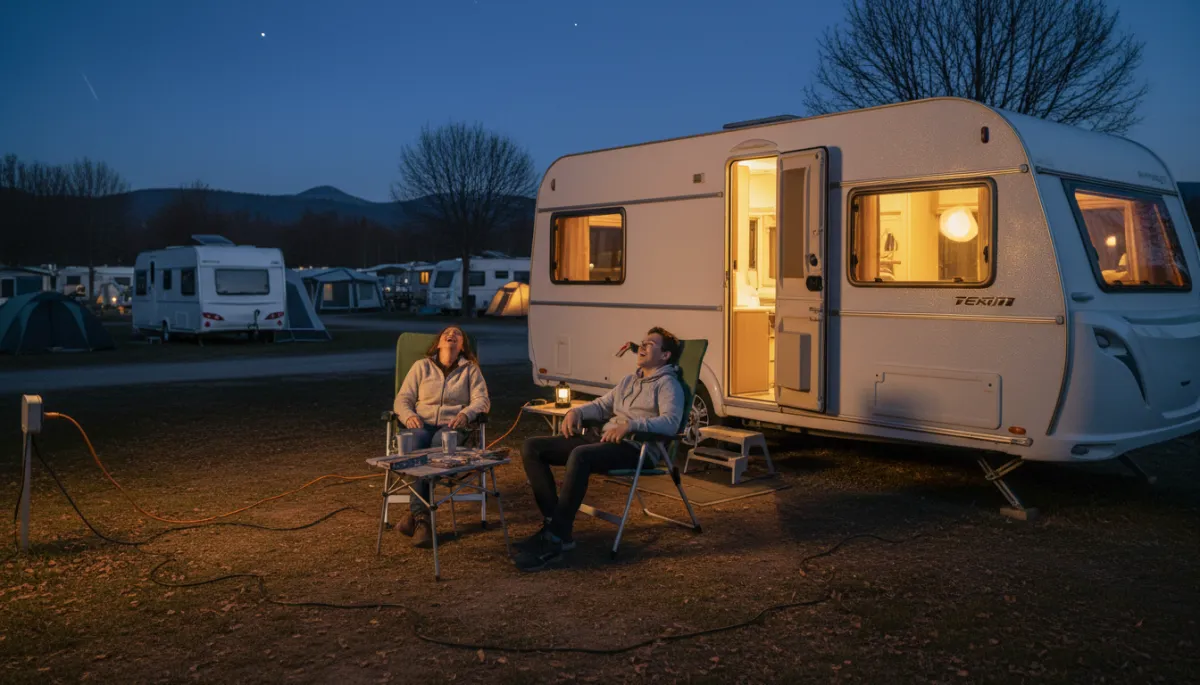
When we protect autonomy and reduce overwhelm, cooperation flows much more easily.
The next time you see immediate resistance in yourself, your partner, or your ADHD teen, try asking: “I wonder what’s underneath the NO?” Because sometimes they genuinely don’t want to do it… and sometimes, they were actually going to do it until you asked.
If you’d like support unpacking your own demand avoidance, executive functioning, and that fiery little autonomy-protector inside your ADHD brain, this is exactly the kind of work we do at Thriving Minds Coaching. You’re not broken; your brain is communicating. We just need to learn how to listen with more curiosity and a lot more compassion.
Warmly,
Trudy
Thriving Minds Coaching
P.S. If you happen to see me at a caravan park standing beside a completely unchocked caravan with no electricity or running water… please don’t ask me if I’ve done it yet. I promise I was just about to.


